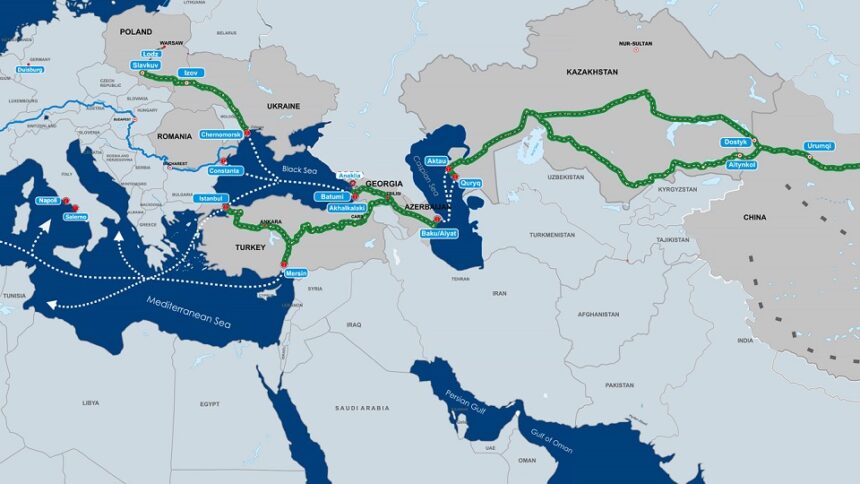
Executive Summary
This article analyzes China’s external economic engagement in the South Caucasus, focusing on Armenia, Georgia, and Azerbaijan, within the framework of geoeconomics and state-led capitalism. It argues that the region occupies a secondary but functionally relevant position in China’s Eurasian strategy, driven primarily by connectivity and risk diversification rather than large-scale economic integration. China’s approach is characterized by selective, country-specific engagement, with Azerbaijan emerging as the most relevant partner, Georgia facing geopolitical and regulatory constraints, and Armenia remaining limited to niche cooperation. The study highlights a persistent asymmetry of expectations between China and the South Caucasus states and concludes that sustainable benefits from cooperation with China will depend on institutional capacity, realistic strategic planning, and improved regional coordination.
Boris Khachikyan
Get in Touch
Interested in discussing Asia, China-related analysis, or potential collaboration?
I’m open to discussions related to analytical work, business engagement, and Asia-focused projects. You’re welcome to reach out or schedule a meeting.
Leave a Reply